Founder · Mr Eddie Flores
I figure out who you actually are. Then I point the camera.
I started this studio because I got tired of watching good business owners disappear behind bad video. Story-first means the brand-message conversation happens before any camera comes out.
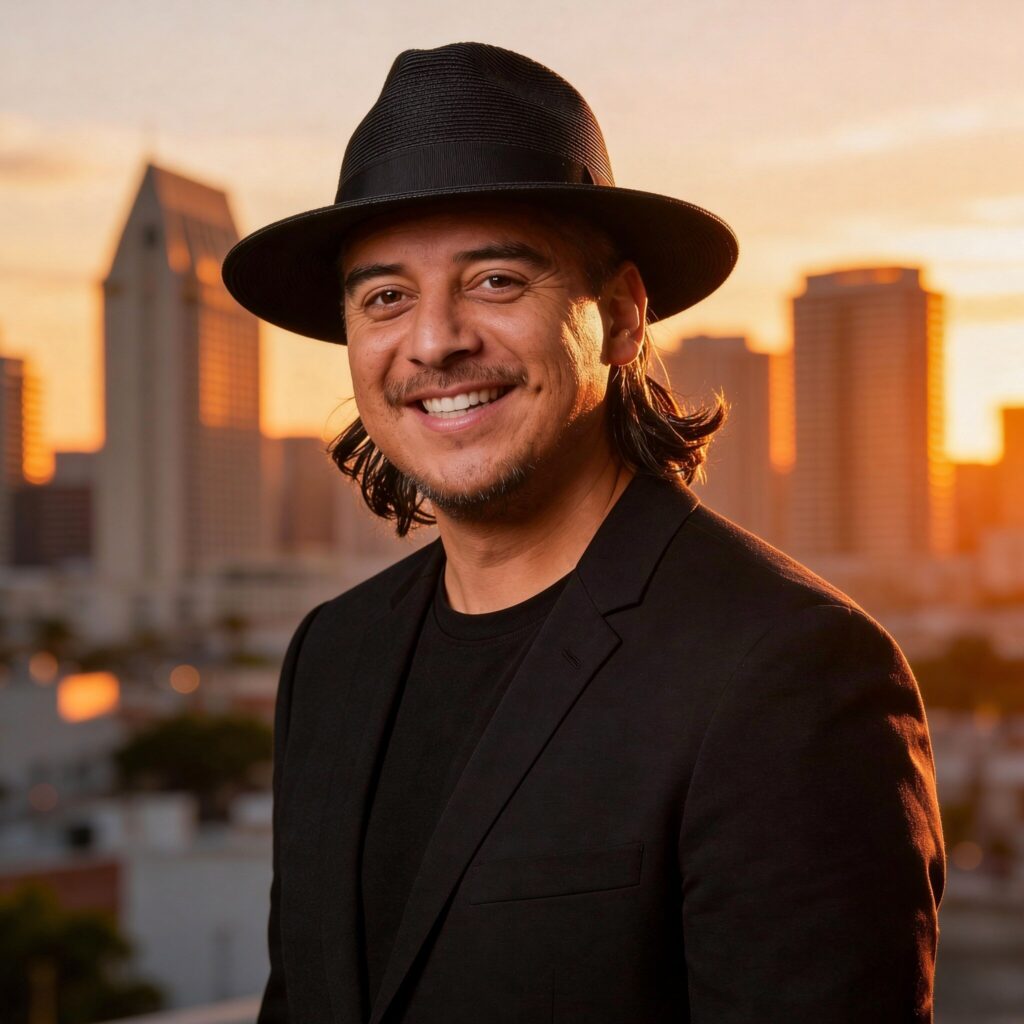
I got tired of watching good business owners disappear behind bad video.
I started this studio because I kept watching the same thing happen to people I respected. Owners who could outwork anyone in a room, who knew their craft cold, who built businesses with their bare hands. And they were invisible online. Their feeds were quiet. Their competitors were doing victory laps. They wanted to fix it, they tried to fix it, and every single time they hired someone with a camera the footage came back wrong. It looked like a corporate ad. It sounded like a sales pitch. It didn’t sound like them. After enough of those conversations I figured out the actual problem. It wasn’t the gear. It wasn’t the lighting. It was that nobody was sitting down with the founder first and finding the human story underneath all the busy. That’s the work I do. I help business owners and entrepreneurs figure out who they actually are on camera, and I make sure the video that comes out the other side sounds like them, not a polished knockoff.
Before any camera comes out, we sit down and have a real conversation. Tough questions delivered with empathy. The goal is to find your superpower, the thing that makes you different, the thing you’ve been too close to your own business to see. We’re not making content for the algorithm. We’re talking to your customers like humans. We’re showing the part of you that nobody else can copy. Most videographers skip this whole step. They show up, ask you to be natural, and you freeze. I do the opposite. By the time we’re rolling, you already know what you want to say, and the camera turns into a friend instead of a judge. That’s the unlock. Story first. Camera second. Every time.
I’m picky about who I work with. Not because I’m trying to seem fancy, but because the process only works if both sides care. I say yes to people with a servant mentality. Owners who treat their customers like people, who invest in themselves, who have interesting stories and want them told well. Fun people with real stakes in what they’re doing. I love working with those folks. I say no to anyone who wants the cheapest, the fastest, or the trick that makes them look bigger than they are. Cheap clients hate the output, fast clients hate the process, and people who only care about money never stick around long enough for the real work to land. If you’re reading this and you’re nodding, we’re going to get along. If you’re reading this and rolling your eyes, that’s information for both of us.
What I say no to.
Three categories of work do not belong in this studio. The cheap shoot, the fast shoot, and the chasing-money client. None of those projects produce footage anyone is proud of, and that includes the client. Cheap means we cut corners on the conversation that makes the camera work. Fast means we never get to the moment where you forget the camera is rolling. Chasing-money means the customer at the center of the work is just the wallet, and the footage feels that way on screen. I have done all three early in my career. The clients hated the output. I hated making it. We never repeated the mistake. So now the answer is no, kindly and directly, on the discovery call. The clients I do say yes to are people with a servant mentality, real stakes in their work, and the patience for one real conversation before the camera comes out. That filter is not a marketing trick. It is how I stay good at what I do.
How I got here.
I picked up a camera young and never put it down. Years on shoots, years editing other people’s footage, years watching what worked and what did not. The pivot point was not a gear upgrade. It was a client. A real introvert who hated being on camera, who had been putting video off for two years, who almost cancelled the shoot the night before. We sat down a week ahead of time and just talked. No camera. No script. By the end of that session she was telling stories about her customers she had never put into words. The shoot itself was the easy part. Watching her watch the playback and break into a real smile, that was the day I understood the work. The camera is not the product. The conversation is. From that point forward, every shoot has started with the conversation. Every single one.
HOW WE WORK
Four steps. Zero fluff.
1. Brand-Message Conversation
Before the camera comes out, we work out who you actually are, who you’re really talking to, and what makes you different. This is the front end most videographers skip.
2. Comfort Coaching
By the time we shoot, you’re answering questions you’ve already thought through. Most clients are surprised by how natural it ends up feeling on camera.
3. The Shoot
Half-day or full-day on location. Full audio, lighting, multi-camera. We move fast but we don’t rush you. The conversation we already had is doing most of the work.
4. Edited Deliverables
Horizontal master plus vertical social cuts. Roughly a week after the shoot. You get footage that looks like you on a good day, because that is what we captured.